
What is the Difference Between SEO and GEO?
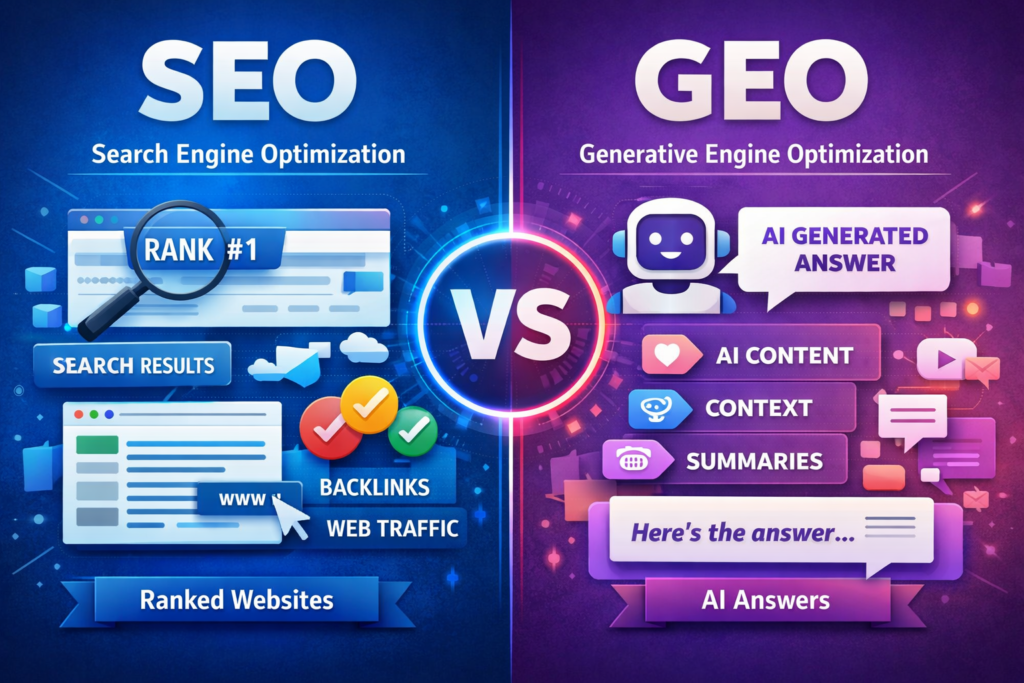
The Difference Between SEO and Search Engine Optimization in ISAPASC SEO (Search Engine Optimization) has ruled the online visibility game for several years. But as AI-based search engines like ChatGPT, Google Gemini, and Microsoft Copilot gain prominence, the idea of Generative Engine Optimization (GEO) is emerging.
Both SEO and GEO are techniques that maximize online visibility but in different ways and for different search engines. Marketers who want to stay competitive in the AI-driven digital landscape must understand the difference.
SEO (SEARCH ENGINE OPTIMIZATION) – ALL YOU NEED TO KNOW!
Search Engine Optimization (SEO) is the act of optimizing a website in order for it to rank higher on traditional search engines similar to Google Search, Bing and Yahoo Search. SEO is primarily aimed at increasing organic traffic by enhancing your site’s visibility on search engine results pages (SERPs).
How does SEO work?SEO helps search engines recognize the relevance and quality of a site’s content. Marketers tweak anything from keywords and website structure to backlinks and user experience for better ranking
Key Components of SEO
Keyword Optimization
Search engine optimization (SEO) searchumnents heavily on the process of finding relevant keywords that people search.
On-Page SEO
This involves optimizing title tags, meta descriptions, headings, internal links, and content quality.
Technical SEO
Making sure of page loading rate, mobile usability, indexing and structured data
Off-Page SEO
That was getting high-quality backlinks from top websites to improve the domain authority.
User Experience (UX)
You are optimized for data until October 2023.
As an example, if someone searches for the “best digital marketing services in Kerala“, then SEO helps you rank a related website on top of search results.
GEO, What is Generative Engine Optimization?
Generative Engine Optimization (GEO) is an emerging digital marketing strategy adapted for AI-powered search engines and generative AI environments. Instead of ranking web pages the way traditional Google does, these systems see information from a variety of places and generate direct answers for users.
Instead of lists of links, platforms like ChatGPT, Google Gemini and Perplexity AI offer conversational responses. Which means that GEO centers on content optimization so that these same systems reference, summarize or cite your site in the course of constructing answers.
Key Components of GEO
AI-Readable Content
Difference Between SEO and Generative Engine Optimization (GEO)
In the fast-evolving world of digital marketing, businesses must constantly adapt to new technologies and search behaviors. For many years, Search Engine Optimization (SEO) has been the foundation of online visibility. However, with the rise of AI-powered search platforms such as ChatGPT, Google Gemini, and Microsoft Copilot, a new concept called Generative Engine Optimization (GEO) has started gaining attention.
Both SEO and GEO aim to improve online visibility, but they work in different ways and focus on different types of search engines. Understanding the difference between them is essential for marketers who want to stay competitive in the AI-driven digital landscape.
What is SEO (Search Engine Optimization)?
Search Engine Optimization (SEO) is the process of optimizing a website so that it ranks higher on traditional search engines like Google Search, Bing, and Yahoo Search. The main goal of SEO is to increase organic traffic by improving a website’s visibility in search engine results pages (SERPs).
SEO works by helping search engines understand the relevance and quality of a website’s content. Marketers optimize different elements such as keywords, website structure, backlinks, and user experience to achieve better rankings.
Key Components of SEO
Keyword Optimization
SEO relies heavily on identifying and targeting relevant keywords that users search for.
On-Page SEO
This includes optimizing title tags, meta descriptions, headings, internal links, and content quality.
Technical SEO
ring fast page loading speed, mobile responsiveness, proper indexing, and structured data.
Off-Page SEO
Develop original, insightful, and well-researched content that naturally attracts backlinks from reputable sites.
User Experience (UX)
Search engines prioritize websites that provide useful and engaging experiences to visitors.
For example, if someone searches for “best digital marketing services in Kerala,” SEO ensures that a relevant website appears at the top of search results.
What is Generative Engine Optimization (GEO)?
Generative Engine Optimization (GEO) is a newer digital marketing strategy designed for AI-powered search engines and generative AI platforms. Instead of simply ranking web pages, these systems generate direct answers for users by summarizing information from multiple sources.
Platforms such as ChatGPT, Google Gemini, and Perplexity AI provide conversational responses rather than traditional lists of links. GEO focuses on optimizing content so that these AI systems reference, summarize, or cite your website when generating answers.
Key Components of GEO
AI-Readable Content
Content must be structured clearly so AI models can easily understand and summarize it.
Authority and Credibility
AI engines prefer trusted and authoritative sources when generating responses.
Contextual Relevance
GEO focuses on answering user questions naturally instead of just targeting keywords.
Structured Information
FAQs, bullet points, clear headings, and well-organized content help AI systems extract information.
Brand Mentions
If your brand is frequently referenced online, AI engines are more likely to include it in generated responses.
Key Differences Between SEO and GEO
Although SEO and GEO both aim to improve online visibility, their strategies and outcomes are quite different.
Aspect | SEO | GEO |
Platform Focus | Traditional search engines | AI-powered generative engines |
Search Results | List of ranked web pages | AI-generated answers |
Main Goal | Rank higher in SERPs | Be referenced in AI responses |
Optimization Method | Keywords, backlinks, technical SEO | Contextual content and AI-readable structure |
User Interaction | Clicking links to visit websites | Conversational AI responses |
In simple terms, SEO helps your website appear in search results, while GEO helps your content become part of AI-generated answers.
Why GEO is Becoming Important
Increased use of voice search through smart assistants like Siri, Alexa, and Google AssistanInstead of typing short keywords, users now ask complete questions to AI assistants. This shift is transforming the search experience.
Generative AI platforms provide quick summaries without requiring users to visit multiple websites. As a result, businesses must optimize their content not only for traditional search engines but also for AI-driven systems.
Some major reasons why GEO is growing in importance include:
- The rise of conversational AI search
- Increasing use of AI assistants for information
- Faster and more personalized search experiences
- AI-generated summaries replacing traditional results
Companies that adapt early to GEO strategies will gain a competitive advantage in the future digital ecosystem.
How SEO and GEO Work Together
Although GEO is a new concept, it does not replace SEO. Instead, both strategies work together.
A strong SEO foundation helps search engines discover and index your content, while GEO ensures that AI systems can interpret and summarize that content effectively.
For example:
- SEO brings traffic from search engines.
- GEO increases brand visibility in AI-generated answers.
Businesses that combine both approaches will have better chances of reaching audiences across traditional search platforms and AI-driven systems.
The Future of Search Optimization
The future of digital marketing will likely involve a hybrid approach that includes both SEO and GEO. As AI technology continues to advance, generative search experiences will become more common.
Marketers will need to create high-quality, informative, and well-structured content that satisfies both search engine algorithms and AI models.
Instead of focusing only on rankings, the focus will shift toward providing valuable answers to user questions. This approach not only improves search visibility but also builds trust and authority in the digital space.
Conclusion
SEO and Generative Engine Optimization represent two important strategies for improving online visibility. SEO focuses on ranking websites on traditional search engines, while GEO focuses on optimizing content for AI-powered platforms that generate answers.
As search technology evolves, businesses must adapt to these changes. By combining the strengths of SEO and GEO, companies can ensure their content reaches users across both traditional and AI-driven search environments.
In the coming years, the integration of these strategies will play a crucial role in shaping the future of digital marketing. 🚀
If you want, I can also explain with:
- SEO title + meta description for this blog
- focus keywords and LSI keywords
- a blog structure optimized for ranking on Google.